
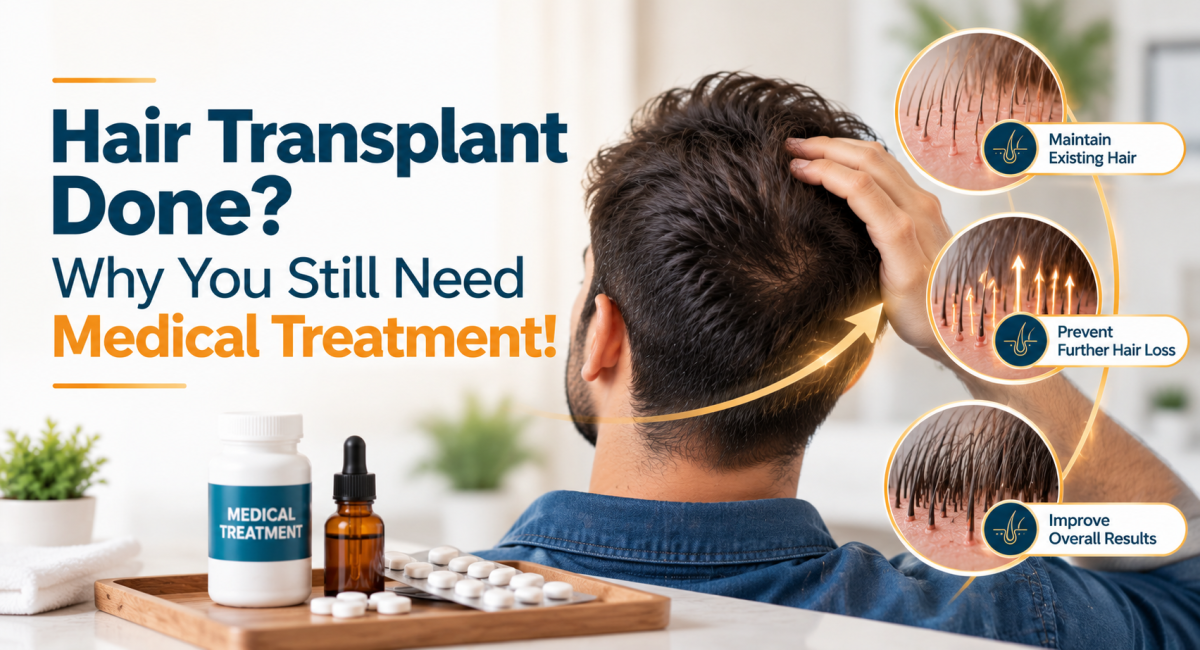
Hair Transplant Done? Why You Still Need Medical Treatment!
Your hair transplant may be successful today. But will your hair still look natural 10–20 years later?
Many patients believe that once they undergo hair transplantation, their baldness problem is permanently solved and medicines are no longer necessary.
This is one of the most important misconceptions about hair transplantation.
A hair transplant can restore hair to bald areas, but it does not stop the continuing process of androgenetic alopecia (genetic baldness).
1. Your Transplanted Hair May Survive — But What About Your Existing Hair?
Transplanted hair is generally more resistant to the hormonal effects responsible for pattern baldness.
However, your original, non-transplanted hair may continue thinning and disappearing over the years.
Imagine having a beautifully transplanted frontal hairline at age 28.
At age 38, your transplanted hairline may still be present, but the natural hair behind it may have significantly thinned.
The result? An unnatural-looking island of transplanted hair surrounded by increasing baldness!
This is why medical treatment remains important even after successful transplantation.
2. Finasteride — Helping to Slow Future Baldness
Finasteride reduces the formation of dihydrotestosterone (DHT), the hormone responsible for progressive follicular miniaturization in genetically susceptible men.
It can help:
Slow down further loss of existing natural hair.
Preserve hair density and thickness.
Reduce the risk of developing new bald areas.
Finasteride is an established treatment for male-pattern hair loss. However, it requires medical assessment and counselling about possible adverse effects, including sexual and mood-related effects.
Finasteride does not merely support today’s appearance — it can help protect the hair you may otherwise lose tomorrow.
3. Minoxidil — Supporting Hair Growth and Thickness
Minoxidil helps maintain the growth of susceptible hair follicles and may improve the thickness and density of existing hair.
When appropriately prescribed, it can complement finasteride in selected patients.
Topical minoxidil is commonly used. Oral minoxidil may be considered in certain patients under medical supervision.
The important point: Medicines work only while their benefits are maintained through appropriate ongoing treatment.
Discontinuing effective therapy may gradually reverse its benefits.
4. What About Nutraceuticals, Vitamins and Supplements?
Adequate nutrition is important for healthy hair growth.
Protein, iron, vitamin D, zinc, and other nutrients may be relevant when dietary intake is inadequate or deficiency is present.
Selected nutraceuticals may offer additional benefits, but the scientific evidence is less established than that for finasteride and minoxidil.
Supplements cannot reliably replace proven treatment for androgenetic alopecia.
Unnecessary supplements should be avoided, and suspected deficiencies should be assessed appropriately.
5. Can Medicines Reduce the Need for Another Hair Transplant?
Yes, in suitable patients, effective medical treatment may slow further hair loss and reduce or postpone the need for additional surgery.
This is particularly important for patients undergoing their first hair transplant in their 20s or early 30s.
Their baldness may continue progressing for decades, while the donor hair available for future transplantation remains limited.
Preserving existing natural hair also helps conserve precious donor follicles for possible future requirements.
Final Message: Surgery Restores Hair. Medicines Help Preserve It.
A successful hair transplant is not the end of your treatment — it is one important part of your long-term hair restoration plan.
Before surgery, discuss with your surgeon:
“What medical treatment will I need afterward to preserve my existing hair and reduce future baldness?”
Not every patient requires the same medications. Treatment should be individualized according to age, sex, pattern of hair loss, medical history, and tolerance.
Remember: Your surgeon’s responsibility is not merely to give you a good hairline today, but to help you maintain a natural appearance for years to come.
A hair transplant restores what you have lost. Medical treatment helps protect what you still have.