Saddlebags & Inner Thigh Fat Removal with Liposuction

Saddlebags & Inner Thigh Fat Removal with Liposuction

Stubborn Thigh Fat That Won’t Go Away with Exercise? Liposuction Can Help.

Many women struggle with stubborn fat deposits over the outer thighs (saddlebags) and inner thighs, despite maintaining a healthy lifestyle, regular exercise and proper diet.

These localized fat deposits are often genetically and hormonally influenced and may persist even after significant weight loss.

Why Are Saddlebags Difficult to Remove?

Diet and exercise help reduce overall body fat but cannot selectively eliminate fat from the saddlebags or inner thighs.

Liposuction is the most effective established surgical treatment for directly removing these stubborn localized fat deposits and improving thigh contours.

How Can Liposuction Improve Your Thighs?

Carefully planned liposuction can:

  • Reduce saddlebags – improving outer-thigh contours and reducing disproportionate fullness.

  • Slim the inner thighs – reducing excess fat and, in suitable patients, uncomfortable thigh rubbing.

  • Improve body proportions – creating a smoother transition between the waist, hips and thighs.

  • Provide long-lasting results – permanently removing fat cells from the treated areas.

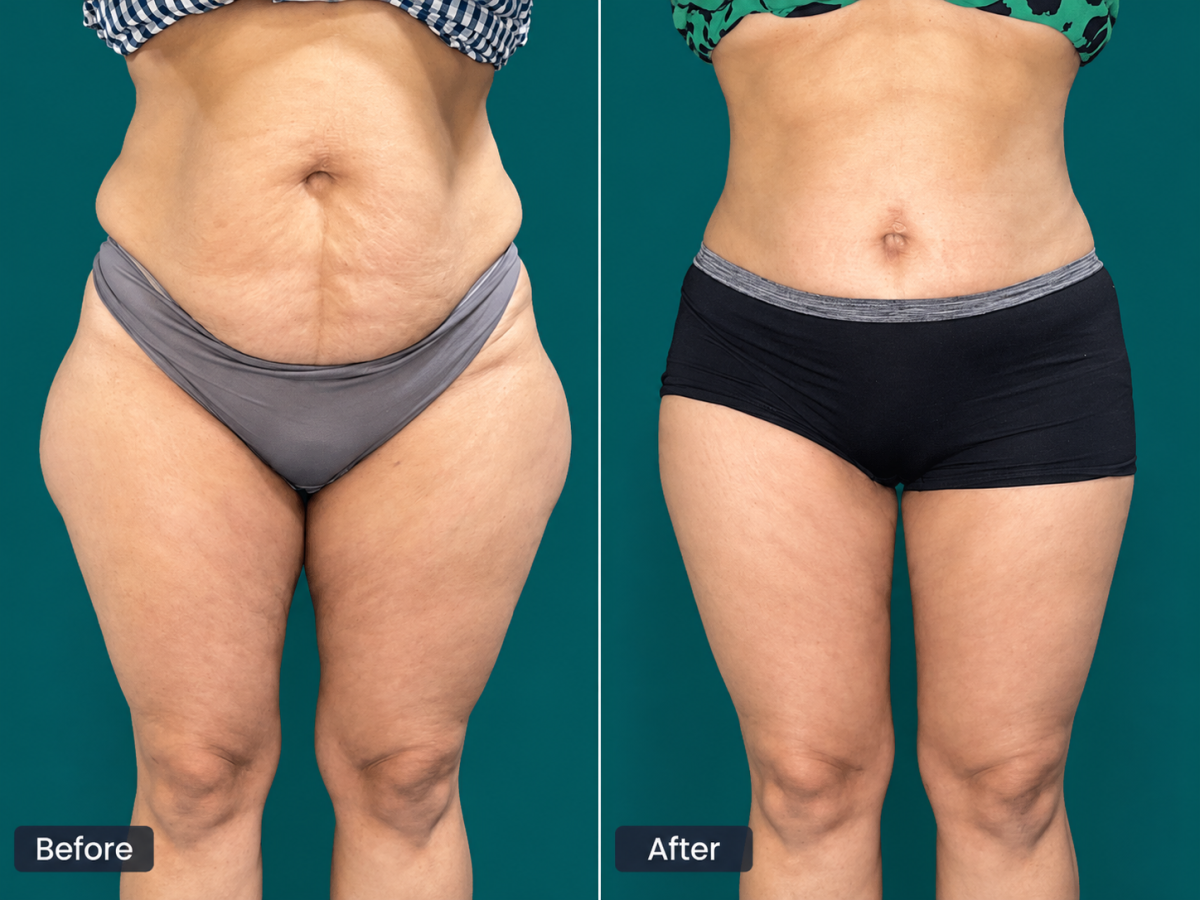
Before & After: Thigh Contouring with Liposuction

Insert clinical before-and-after photograph here.

Caption: Improvement in saddlebags and thigh contours following liposuction. Results vary depending on fat distribution, skin elasticity and individual anatomy.

Will the Fat Come Back?

Fat cells removed through liposuction are permanently eliminated. However, remaining fat cells can enlarge if significant weight is gained.

Maintaining a stable body weight helps preserve the improved contours.

The Secret to Beautiful Results Is Surgical Planning

Successful liposuction is not about removing the maximum amount of fat. It is about removing fat precisely, symmetrically and conservatively, while respecting natural body proportions.

Good skin elasticity is important. Liposuction does not correct significant loose skin or cellulite. Temporary swelling and bruising are common, and final results take several months to develop. As with any surgery, complications are possible.

The goal is not simply thinner thighs — it is a naturally proportionate, smoother and more aesthetically pleasing body contour.

Considering Saddlebags or Inner Thigh Liposuction in Surat?

Dr. Pradipkumar R. Atodaria

Consultant Plastic, Reconstructive & Aesthetic Surgeon

34 Years of Surgical Experience

Ghod-Dod Road, Surat

For Consultation: +91 98242 74810

Treatment suitability and expected results are determined after individual clinical assessment.

For publication on your website, I recommend the SEO page title “Saddlebags & Inner Thigh Liposuction in Surat | Dr. Atodaria” and the following Google meta description:

“Struggling with stubborn saddlebags or inner thigh fat? Learn how liposuction can improve thigh contours with Dr. Atodaria, Plastic Surgeon in Surat.”

Use the authentic clinical before-and-after photographs with patient consent, preserving the actual surgical results rather than digitally reshaping them.

Hair Transplant Done? Why You Still Need Medical Treatment!

Hair Transplant Done? Why You Still Need Medical Treatment!

Your hair transplant may be successful today. But will your hair still look natural 10–20 years later?

Many patients believe that once they undergo hair transplantation, their baldness problem is permanently solved and medicines are no longer necessary.

This is one of the most important misconceptions about hair transplantation.

A hair transplant can restore hair to bald areas, but it does not stop the continuing process of androgenetic alopecia (genetic baldness).

1. Your Transplanted Hair May Survive — But What About Your Existing Hair?

Transplanted hair is generally more resistant to the hormonal effects responsible for pattern baldness.

However, your original, non-transplanted hair may continue thinning and disappearing over the years.

Imagine having a beautifully transplanted frontal hairline at age 28.

At age 38, your transplanted hairline may still be present, but the natural hair behind it may have significantly thinned.

The result? An unnatural-looking island of transplanted hair surrounded by increasing baldness!

This is why medical treatment remains important even after successful transplantation.

2. Finasteride — Helping to Slow Future Baldness

Finasteride reduces the formation of dihydrotestosterone (DHT), the hormone responsible for progressive follicular miniaturization in genetically susceptible men.

It can help:

  • Slow down further loss of existing natural hair.

  • Preserve hair density and thickness.

  • Reduce the risk of developing new bald areas.

Finasteride is an established treatment for male-pattern hair loss. However, it requires medical assessment and counselling about possible adverse effects, including sexual and mood-related effects.

Finasteride does not merely support today’s appearance — it can help protect the hair you may otherwise lose tomorrow.

3. Minoxidil — Supporting Hair Growth and Thickness

Minoxidil helps maintain the growth of susceptible hair follicles and may improve the thickness and density of existing hair.

When appropriately prescribed, it can complement finasteride in selected patients.

Topical minoxidil is commonly used. Oral minoxidil may be considered in certain patients under medical supervision.

The important point: Medicines work only while their benefits are maintained through appropriate ongoing treatment.

Discontinuing effective therapy may gradually reverse its benefits.

4. What About Nutraceuticals, Vitamins and Supplements?

Adequate nutrition is important for healthy hair growth.

Protein, iron, vitamin D, zinc, and other nutrients may be relevant when dietary intake is inadequate or deficiency is present.

Selected nutraceuticals may offer additional benefits, but the scientific evidence is less established than that for finasteride and minoxidil.

Supplements cannot reliably replace proven treatment for androgenetic alopecia.

Unnecessary supplements should be avoided, and suspected deficiencies should be assessed appropriately.

5. Can Medicines Reduce the Need for Another Hair Transplant?

Yes, in suitable patients, effective medical treatment may slow further hair loss and reduce or postpone the need for additional surgery.

This is particularly important for patients undergoing their first hair transplant in their 20s or early 30s.

Their baldness may continue progressing for decades, while the donor hair available for future transplantation remains limited.

Preserving existing natural hair also helps conserve precious donor follicles for possible future requirements.

Final Message: Surgery Restores Hair. Medicines Help Preserve It.

A successful hair transplant is not the end of your treatment — it is one important part of your long-term hair restoration plan.

Before surgery, discuss with your surgeon:

“What medical treatment will I need afterward to preserve my existing hair and reduce future baldness?”

Not every patient requires the same medications. Treatment should be individualized according to age, sex, pattern of hair loss, medical history, and tolerance.

Remember: Your surgeon’s responsibility is not merely to give you a good hairline today, but to help you maintain a natural appearance for years to come.

A hair transplant restores what you have lost. Medical treatment helps protect what you still have.

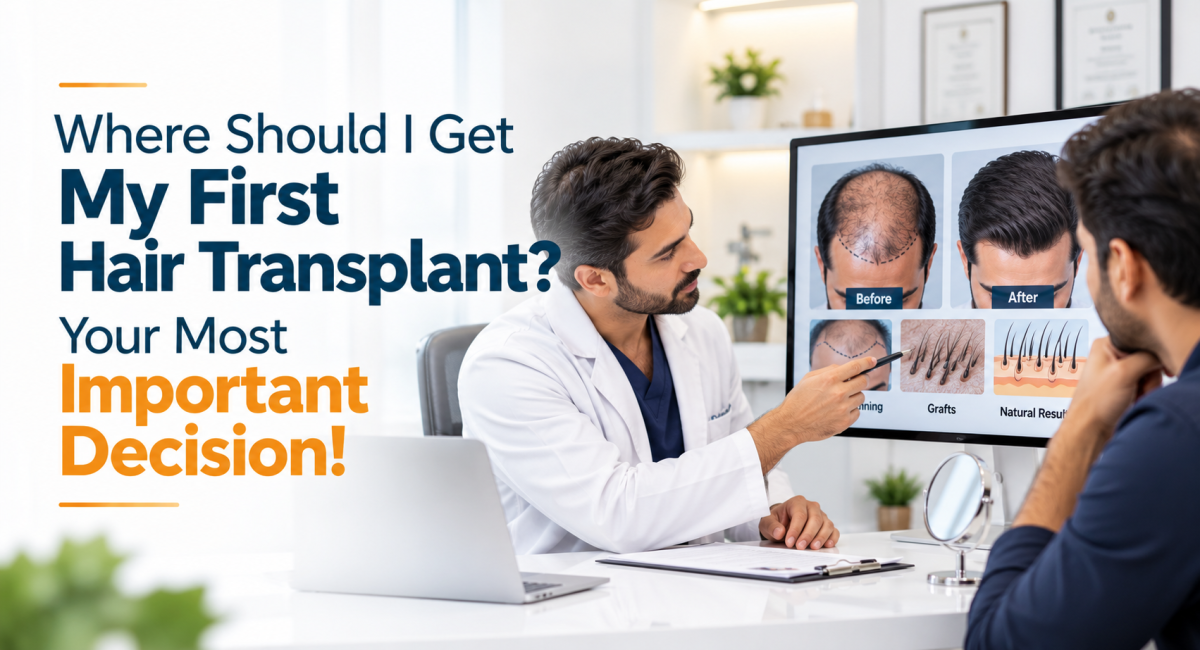
Where Should I Get My First Hair Transplant? Your Most Important Decision!

Where Should I Get My First Hair Transplant? Your Most Important Decision!

Don’t choose a surgeon who can only transplant your hair today. Choose one who can plan for the hair you may lose tomorrow.

If you are considering your first hair transplant in your 20s or 30s, remember one important fact:

Your baldness may continue progressing for decades, even after a successful hair transplant.

You may need a second or even a third transplant in the future. Therefore, the first surgery must be planned exceptionally carefully.

Your first hair transplant is the first station of a long train journey — not necessarily the final destination.

1. Experience Matters — Your Surgeon Must Think 20–30 Years Ahead

Androgenetic alopecia is progressive. A young man undergoing transplantation at 25 may continue losing his natural hair at 35, 45, and beyond.

An experienced surgeon should anticipate possible future baldness rather than simply covering today’s bald area.

A hairline that looks attractive at 25 should also look natural at 45 or 60.

An excessively low hairline or unnecessarily dense first transplant may consume valuable donor follicles that could be needed later.

The surgeon should assess your age, family history, progression of baldness, donor-hair quality, and potential benefit from medical treatment.

2. Planning Is More Important Than the Number of Grafts

Your donor hair is limited. Once harvested, those follicular units cannot simply be replaced in the donor area.

The biggest mistake in a young patient may be to extract too many grafts during the first procedure without considering future requirements.

Excessive harvesting can permanently thin or disfigure the donor area, leaving insufficient hair for subsequent transplants.

A responsible surgeon should plan not just the first operation but also how the remaining donor hair could be used if baldness progresses.

The best first hair transplant is not necessarily the one that uses the maximum number of grafts. It is the one that preserves your future options.

3. Why Should Your Surgeon Be Experienced in FUE, FUT and Body Hair Transplantation?

Today, FUE is widely promoted, sometimes as though it were the only modern method of hair transplantation.

But FUE is not the only technique, and it is not necessarily the best option for every patient.

Three important harvesting options are:

  • FUE (Follicular Unit Excision): Individual grafts are extracted using small punches.

  • FUT (Follicular Unit Transplantation): A strip of donor scalp is removed and divided into follicular-unit grafts.

  • Body Hair Transplantation: Suitable hair, commonly from the beard and occasionally other body areas, may supplement scalp donor hair in selected patients.

Each technique has advantages, limitations, and different effects on the donor area.

In patients with progressive or extensive baldness, carefully combining FUE and FUT — and sometimes body hair — may help optimize the available donor supply over multiple procedures.

A surgeon who offers only FUE may overlook alternatives that could be more appropriate for your long-term donor management. Repeated or excessive FUE harvesting can cause permanent donor thinning.

FUT also leaves a linear scar, and body hair differs from scalp hair in its growth characteristics. Neither technique is suitable for everyone.

Therefore, choose a surgeon who is genuinely experienced in evaluating multiple techniques, rather than automatically recommending the only technique available at that clinic.

4. Five Questions You Must Ask Before Your First Hair Transplant

1. How much more hair am I likely to lose over the next 20–30 years?

2. If I need a second or third transplant, approximately how many additional grafts might I require?

3. How many usable follicular units do I currently have in my permanent donor area, and how many should be preserved?

4. Where will you obtain additional grafts for future transplants?

5. Are you experienced in FUT as well as FUE, and can you assess whether body hair could be useful in my case?

No surgeon can predict your future hair loss or exact graft requirements with certainty. However, an experienced surgeon should be able to explain possible scenarios and develop a sensible long-term plan.

Final Message: Your First Hair Transplant May Decide Your Future Options

Don’t choose your surgeon merely because of a low price, a promise of 5,000 grafts, or an attractive hairline today.

Choose a surgeon with:

Experience to anticipate future baldness.

Judgment to preserve your precious donor hair.

Expertise to select and combine appropriate surgical techniques.

Remember: Your first hair transplant is the first station of a long train journey. Choose a surgeon who understands the entire journey — not just the first station.

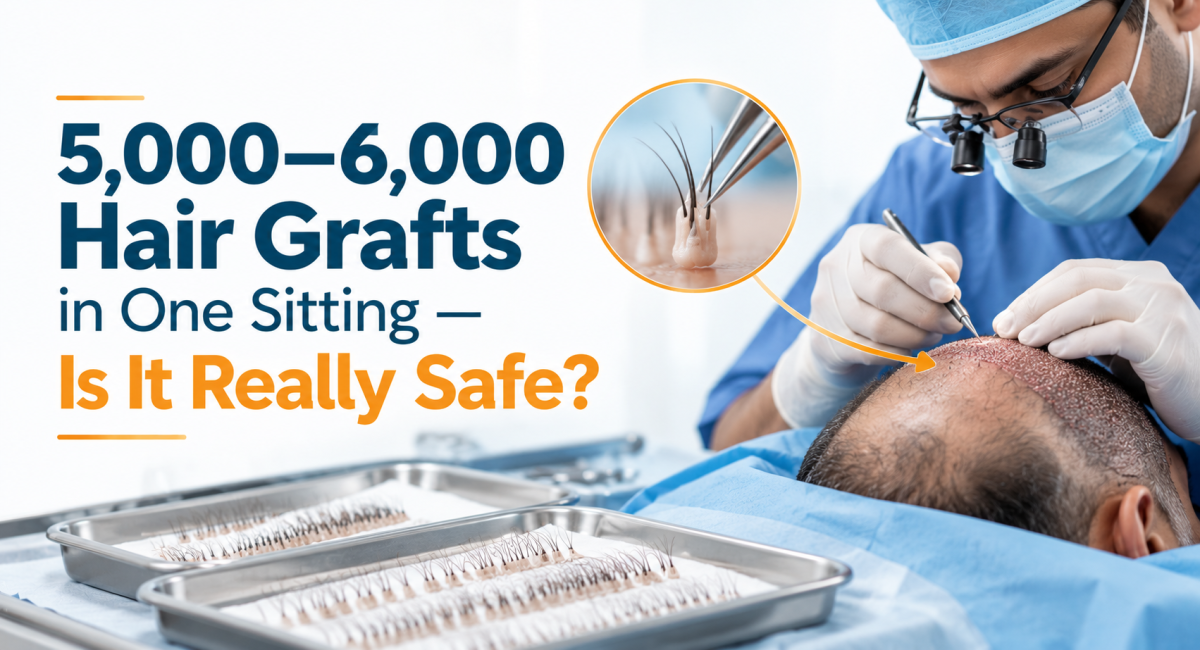
5,000–6,000 Hair Grafts in One Sitting — Is It Really Safe?

5,000–6,000 Hair Grafts in One Sitting — Is It Really Safe?

Before being impressed by a promise of 5,000 or 6,000 FUE grafts, ask one important question: How many grafts does your donor area actually contain?

Today, some hair transplant centres advertise 5,000–6,000 grafts in a single sitting, making patients believe that more grafts automatically mean better results.

But is harvesting such a large number always safe? And what happens to the remaining hair in your donor area?

1. Your Donor Hair Is Limited — Understand the Mathematics

The permanent donor area, situated mainly at the back and sides of the scalp, contains a limited number of follicular units (grafts).

For illustration, consider a patient with 10,000 follicular units in the donor area.

Grafts extractedPercentage removed
2,50025%
3,50035%
5,00050%
6,00060%

Would you really want to remove 50–60% of your available donor grafts in a single sitting?

Excessive FUE harvesting can permanently reduce donor density, cause visible thinning or patchiness, and limit future hair transplantation.

2. What Does Scientific Research Say?

A published Indian study involving 580 men assessed the number of follicular units available in different donor zones.

Using a conservative 25% extraction approach, researchers estimated approximately:

  • 2,064 grafts from a limited donor zone.

  • 3,097 grafts from a standard donor zone.

  • 3,612 grafts from an extended donor zone.

The authors recommended harvesting approximately 25% in the first sitting, with further extraction considered in selected patients after adequate recovery.

Importantly, the extended donor area may not remain permanently resistant to future hair loss.

These figures are population estimates, not fixed limits for every patient.

3. What Happens When Too Many Grafts Are Harvested?

FUE does not create new hair follicles. It simply transfers existing follicles from the donor area to the bald area.

Once a follicular unit is completely removed, it does not regenerate as a new follicular unit in its original location.

Overharvesting may result in:

  • Permanent thinning of donor hair.

  • Patchy, unnatural appearance at the back of the scalp.

  • Increased risk of damage to surrounding follicles.

  • Insufficient donor hair for future transplantation.

Remember: A successful hair transplant should improve the bald area without unnecessarily damaging the donor area.

4. What Should You Ask Before Agreeing to 5,000–6,000 Grafts?

Ask your surgeon:

“Doctor, have you measured my donor-area density and estimated the total number of follicular units available? What percentage do you plan to extract, and how will my donor area look afterward?”

A responsible surgeon should consider donor density, hair thickness, future hair loss, and the long-term appearance of both donor and recipient areas before recommending the graft count.

Harvesting 5,000–6,000 grafts may be possible in carefully selected patients, sometimes over multiple sessions. However, such numbers should never be promised routinely without assessing individual donor capacity.

Final Message: More Grafts Do Not Always Mean a Better Hair Transplant

Your donor hair is a limited, irreplaceable resource.

The aim of hair transplantation should not be to harvest the maximum number of grafts, but to achieve natural coverage while preserving sufficient donor hair for the future.

Before agreeing to 5,000–6,000 grafts, don’t just ask, “How much hair will I gain?”

Ask, “How much of my precious donor hair will I lose?”

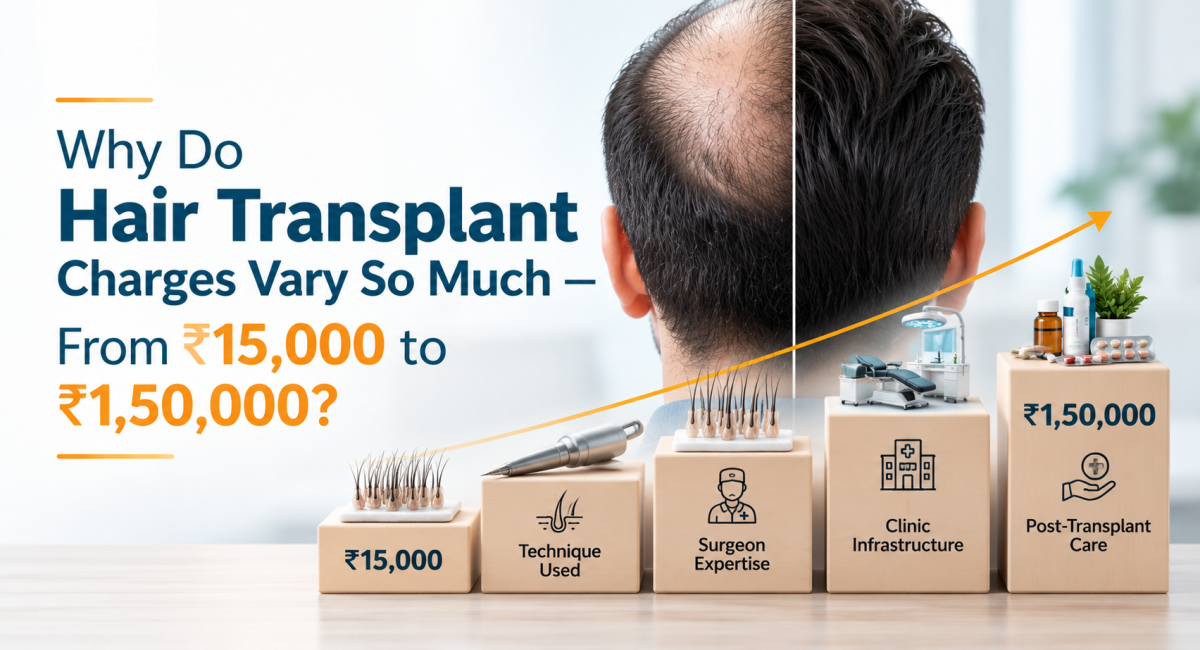
Why Do Hair Transplant Charges Vary So Much — From ₹15,000 to ₹1,50,000?

Why Do Hair Transplant Charges Vary So Much — From ₹15,000 to ₹1,50,000?

Are you paying for a qualified surgeon’s expertise, or simply for someone to transplant your hair?

Today, hair transplantation is advertised in India at prices ranging from ₹15,000 to ₹1,50,000 or more.

Why should the same procedure cost ten times more at one centre than another? Is an expensive hair transplant necessarily better?

The answer may surprise you. Although the procedure carries the same name, the qualifications of the person performing it, the quality of surgery, and the standards of the facility can be vastly different.

1. Who Actually Performs Your Hair Transplant?

This is perhaps the most important factor influencing the charges.

In India, patients may encounter five different types of establishments offering hair transplantation:

  1. A qualified, experienced surgeon personally performs the essential surgical steps in a properly equipped centre, assisted by trained staff [The percentage is in a single digit].

  2. A qualified surgeon is available, but technicians perform substantial parts of the surgery, potentially including steps that require a licensed medical practitioner[Most common scenario].

  3. An un-qualified doctor available, but technicians perform the procedure [Less common].

  4. Technicians perform the procedure without a qualified doctor present [Increasingly Common].

  5. Hair transplantation is offered even in hair salons or beauty parlours, sometimes without appropriate medical personnel or surgical facilities [Increasingly common].

These arrangements are not equivalent in terms of professional expertise, safety, or operating costs.

Remember: A qualified doctor’s name on the signboard does not necessarily mean that the doctor will personally perform your surgery.

2. Are You Paying for Grafts or Healthy, Growing Hairs?

Some centres advertise 3,000, 4,000, or even more grafts at attractive prices.

But more grafts do not automatically mean better results.

One follicular-unit graft may contain one, two, three, or more hairs. A large number of poorly harvested grafts may contain fewer intact hairs than a smaller number of carefully harvested grafts.

Furthermore, excessive graft extraction may permanently thin the donor area.

Ask your surgeon:

“How many grafts will you harvest, how many hairs will they contain, and how will you document the actual number transplanted?”

3. Surgical Precision: Why Does Experience Matter?

A natural-looking hair transplant requires much more than simply implanting grafts.

The surgeon must carefully plan the hairline, decide the direction and angle of hair growth, and create appropriately sized recipient-site incisions while protecting existing follicles and surrounding blood supply.

Similarly, FUE harvesting requires selecting an appropriate punch size to minimize follicular injury and preserve the donor area.

A poorly planned hair transplant may grow hair but still look unnatural.

Correcting such results can be difficult, expensive, and sometimes impossible to achieve satisfactorily.

4. What About Surgical Facilities and Patient Safety?

Hair transplantation is surgery, even when performed under local anaesthesia.

Proper sterilization, trained personnel, suitable instruments, safe anaesthesia, emergency preparedness, and postoperative care involve costs.

A very low quotation may simply reflect a smaller procedure or lower operating expenses. However, it is worth checking whether essential medical standards are being maintained.

Never compromise surgical safety merely to save money.

5. Does Paying ₹1,50,000 Guarantee a Better Result?

Certainly not. A higher price does not guarantee better surgery, nor does a lower price automatically mean poor-quality treatment.

But price comparisons are meaningful only when you know exactly what you are comparing.

Before making your decision, ask three important questions:

1. Who will actually operate on me?
Will the qualified surgeon personally perform graft harvesting and recipient-site incisions? Check whether the surgeon’s OPD timings overlap with your scheduled operation.

2. How will you prove the number of grafts transplanted?
Ask for a documented graft count, ideally supported by photographs and implantation records.

3. How will you protect my limited donor hair?
Ask about safe harvesting, graft integrity, natural hairline design, and long-term planning.

Final Message: Choose Your Surgeon, Not Just the Package

Hair transplantation is not simply a matter of shifting hair from the back of the scalp to the front.

It is a surgical procedure requiring medical knowledge, technical precision, artistic judgment, and responsible use of your limited donor hair.

A poorly performed transplant may cost much more in the long run, particularly if corrective surgery becomes necessary.

Before choosing between a ₹15,000 and a ₹1,50,000 hair transplant, ask yourself:

“Am I comparing the same quality of surgical care — or merely two different price tags?”

Your donor hair is precious. Once removed, it cannot be replaced in the donor area.

Choose carefully. You may not get a second opportunity with the same donor hair.

When Can I Have A Mommy Makeover?

When Can I Have A Mommy Makeover?

After you’ve been through pregnancy and childbirth, it can feel like your body just isn’t the same. The skin and muscles of the belly have been stretched, and most women expect that. But beyond that, you may have sagging, smaller breasts, and excess fat in places that weren’t a problem before, such as the belly, hips, and thighs.

Many new moms work hard to eat right and exercise, hoping their bodies start to resemble the pre-pregnancy shape again. But despite all that effort, these problems often can’t be fixed with lifestyle changes alone. This is why the mommy makeover has become one of the most popular cosmetic procedures today.

What is a mommy makeover?

The mommy makeover is actually a combination of cosmetic procedures that is customized for each individual. Because the areas each mom wishes to improve can vary from woman to woman, your mommy makeover is a specialized group of procedures designed to give you the best possible results. This may include a breast augmentation, breast lift, tummy tuck, and/or liposuction.

The beauty of the mommy makeover is that you and your cosmetic surgeon can discuss which procedures will benefit you and decide what you want or don’t want. The ultimate goal is to get you looking — and feeling — like your pre-pregnancy self again.

When can I have it done?

Many moms are excited to get their pre-pregnancy figure back as soon as possible. Naturally, the first question is often, “When can I get my mommy makeover done?” The answer to this question varies for each woman, but here are some guidelines to help you plan:

  • If you are planning to have breast augmentation or a breast lift, you need to be done with breastfeeding and lactation before surgery. The breasts change in the weeks following the completion of breastfeeding, so waiting about three months after you’ve finished nursing is ideal. This gives your surgeon the clearest picture of how to help you get your pre-pregnancy bust line back.
  • Most surgeons recommend that patients be done having children before having a tummy tuck done. Otherwise, some of your beautiful results may be undone with a future pregnancy.
  • If you’re still in the process of losing a lot of weight, it’s best to wait until your weight has stabilized before having a mommy makeover. Losing significant weight after your surgery can result in less than optimal results.

Remember that you don’t have to get all the procedures done at once. For instance, you may be ready for breast augmentation and/or breast lift, but aren’t sure about the tummy tuck yet. These can always be done separately or during a time when it’s easier for your schedule. The procedures included in a mommy makeover often mean you need at least a week of recovery time, so enlisting extra help is important.

Imagine putting on some of your pre-pregnancy clothes and feeling like you did before you had kids. It’s possible with the help of an experienced cosmetic surgeon.

If you would like to get your pre-pregnancy body back, the staff at GLOW Surgical Arts would be happy to meet with you to talk about your options and starting the process toward a mommy makeover. Consultations are always free and are focused on your individual wants and needs.